Beyond Just Health Records Digitization; Tips for Successful EHR Implementation in the AI-Powered Era; Tips for Successful EHR Implementation in the AI-Powered Era
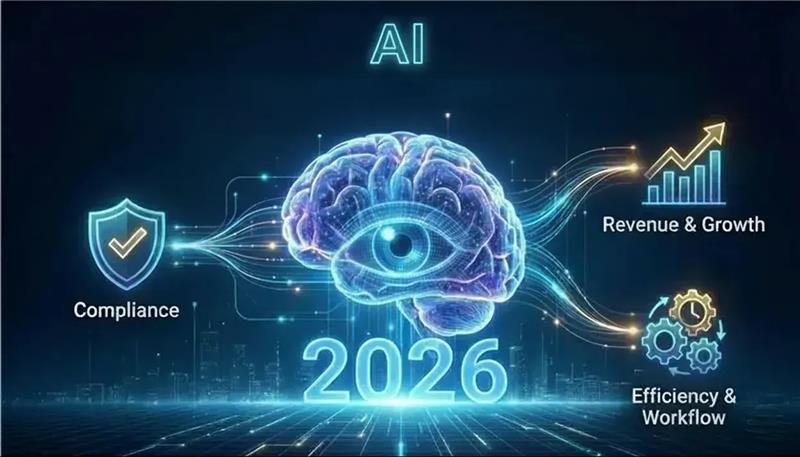
EHR implementation in 2026 is fundamentally different from the past decade. The modern EHR is now an intelligent operating ecosystem — powering AI-assisted documentation, billing automation, analytics, compliance reporting, patient engagement, and ASC coordination. Successful practices no longer “install software”; they design digital infrastructure around clinical, financial, and operational strategy.
In ophthalmology and specialty care, data volume, imaging dependence, patient expectations, and regulatory pressures are rising sharply. Interoperability is now mission-critical. AI assistance is becoming routine. MIPS and policy expectations increasingly require structured, high-quality documentation. Meanwhile, margins remain under pressure — making billing accuracy and workflow efficiency essential.
The most successful EHR implementations today begin with strategy: clearly defining the role of AI, mapping integration needs, aligning workflows across clinic and ASC, embedding billing and compliance into documentation, and preparing teams through structured training and change-management.
The key insight is simple: EHR success is no longer about technology adoption. It is about building a future-ready practice. Those who implement with intention will gain efficiency, financial resilience, staff satisfaction, and patient trust.
And those who do not — will gradually fall behind.
Reading time: 6 Minutes
A Strategic Guide for Ophthalmology and Specialty Practices Preparing for 2026 and Beyond
Over the past decade, EHR adoption has shifted from a technology initiative into a strategic pillar of healthcare delivery. The industry now sits at the intersection of AI-driven automation, regulatory evolution, rising patient expectations, and increasing financial pressures. As we approach 2026, the stakes around EHR success — or failure — have never been higher.
Today’s modern EHR is no longer a digital filing cabinet. It is the operating core of the practice: the engine behind documentation, compliance, reimbursement, care coordination, patient engagement, analytics, and increasingly, clinical intelligence. Practices that implement EHR systems with structure and foresight gain measurable advantages in efficiency, financial performance, and care quality. Those that do not risk carrying forward inefficiencies that compound year after year.
This article explores how ophthalmology and specialty practices can successfully implement an EHR in the new AI-powered era — where interoperability, automation, billing accuracy, and regulatory alignment define the next decade of digital care.
1. Start with Strategy, Not Software — Define the Role of AI and Automation from Day One
A successful EHR implementation today begins not with feature checklists, but with clarity of purpose. Practices must define what role AI and automation should play across clinical, administrative, and financial workflows — both immediately and over time.
AI now supports documentation assistance, coding accuracy, decision-support, patient triage, communication automation, scheduling optimization, and revenue intelligence. But its impact depends on how intentionally it is aligned with real-world workflows.
Before implementation, leadership teams should map:
- Where documentation consumes the most cognitive effort
- Where staff time is spent on repetitive, manual work
- Where billing leakage or denials occur
- Where communication gaps exist
- Where workflows bottleneck — particularly between clinic and ASC
The EHR should then be implemented to solve these specific challenges, not simply to “digitize records.” This ensures the technology truly reduces burden — instead of replacing paperwork with screen work.
Practices that define clear AI use cases see measurable gains early: reduced documentation time, faster throughput, fewer manual tasks, and stronger billing accuracy.
2. Build an Integration-First Implementation Plan
In 2026, integration is not an add-on requirement — it is the backbone of sustainability.
Ophthalmology practices must integrate:
- Diagnostic devices
- Imaging systems
- ASC workflows
- Practice management
- Billing + RCM
- Patient engagement tools
- Referral networks
- Analytics platforms
- AI modules
EHRs that do not integrate fluidly force clinicians into fragmented workflows. Data becomes trapped in silos. Duplicate work proliferates. Errors increase. And billing risk multiplies.
During implementation planning, practices should evaluate:
- Whether device data flows directly into structured fields
- Whether ASC case data connects naturally to clinical documentation
- Whether claims data syncs cleanly with coding
- Whether patient communications operate from the same record
- Whether interoperability standards support external sharing
- Whether APIs allow for future innovation – not just today’s setup
Integration success should be treated as a measurable outcome — not a technical detail.
The practices that thrive in the AI era will be those who own and control their data — rather than store it.
3. Design the Implementation Around Billing, Coding, and Revenue Integrity
EHR implementation success is often measured clinically — but its financial impact is just as critical.
With rising costs, thinner margins, and reimbursement pressures, the EHR must support reimbursement accuracy — not jeopardize it.
- In 2026, billing complexity will continue increasing through:
- evolving coding standards
- payer scrutiny
- medical necessity documentation requirements
- quality program reporting
- automation-driven audits
AI and structured workflows will increasingly assist in:
- automated superbill creation
- coding recommendations
- documentation adequacy checks
- denial-risk alerts
- revenue analytics
However, this requires deliberate configuration.
Implementation teams must align:
- clinical templates with billing logic
- documentation fields with compliance needs
- AI assistance with human oversight
- coding workflows with payer expectations
A strong implementation prevents revenue loss before it happens — rather than reacting to it later.
4. Prepare for MIPS Evolution — Compliance by Design, Not Retrofitting
Quality reporting programs continue evolving — and the documentation required to support them grows more structured each year.
By 2026, practices should expect:
- tighter alignment between EHR data and performance scores
- increasing automation of reporting
- AI-assisted measure tracking
- deeper integration between clinical workflows and quality metrics
The most successful implementations embed compliance into everyday documentation, rather than treating it as an afterthought.
This means:
- alerts at point of care
- structured data tied to measures
- automated reminders for gap closure
- proactive monitoring
- streamlined submission pipelines
Practices that build quality reporting into their EHR workflows early will experience less regulatory burden — and improved financial stability.
5. Align with Government and Policy Direction — Future-Proof Your Investment
- Government policy is increasingly oriented toward:
- data interoperability
- patient data access rights
- AI governance
- cybersecurity resilience
- outcome-based reimbursement models
- digital equity and patient transparency
An EHR implementation in 2026 must therefore account for:
- interoperability compliance
- information-blocking rules
- patient record access standards
- audit traceability
- emerging AI regulatory frameworks
- cybersecurity safeguards
Regulatory-ready design ensures practices grow with policy, rather than scramble to keep up.
6. Build Patient-Centered Digital Experiences Into the Implementation
Patients are no longer passive recipients of care — they are digitally informed, convenience-driven consumers of healthcare services.
They expect:
- mobile engagement
- transparency
- digital scheduling
- secure messaging
- simple payments
- intuitive portals
- continuity across care settings
EHR implementation must therefore include patient experience architecture — not merely back-office configuration.
This requires:- seamless communication channels
- actionable patient data views
- automated reminders
- digital onboarding
- payment integration
Practices that embed patient-centered design early build stronger retention, higher trust, and more predictable schedules.
Those who ignore digital expectations risk disengagement — especially among younger populations.
7. Build a Workforce Adoption Strategy — Because Technology Alone Isn’t Enough
Resistance during EHR implementation is rarely about technology. It is about fear of lost competence, increased burden, or workflow disruption.
Successful implementations require:
- super-user networks
- role-based training
- staged rollout
- open communication
- feedback loops
- leadership alignment
- psychological safety during transition
The goal is not simply to “teach the software,” but to rebuild confidence around new workflows and digital intelligence.
Practices that invest in workforce readiness gain smoother transitions, faster adoption, and higher system satisfaction.
8. Establish Continuous Optimization — Implementation Never Ends
The AI-powered era requires living systems — not static installations.
A successful EHR implementation plans for:
- iterative refinement
- new AI capabilities
- expanding integrations
- updated clinical standards
- regulatory adjustments
- analytics evolution
This transforms the EHR from a fixed asset into a continuously improving ecosystem.
Organizations that treat implementation as a one-time milestone eventually fall behind. Those who build optimization into their culture continue compounding value over time.
9. Financial Strategy: Build Predictability Into Technology Spending
Rising operating costs have forced healthcare leaders to rethink digital investment models. Predictable, comprehensive, service-based platforms increasingly replace fragmented, unpredictable technology spending.
During implementation planning, practices should seek:
- predictable cost models
- bundled technology and service
- proactive upgrades
- scalable infrastructure
- reduced dependence on one-off vendors
This financial clarity enables confident long-term planning, even in volatile economic environments.
10. Measure What Matters — Define Post-Implementation Success Metrics
A modern EHR implementation should produce measurable change.
Meaningful outcomes may include:
- reduced documentation time
- increased chart completion at point of care
- higher first-pass claim acceptance
- reduced denials
- fewer staff hours spent on manual work
- improved patient satisfaction
- enhanced provider experience
- stronger regulatory alignment
- more predictable revenue
Measurement turns progress into strategy.
EHR Success in the AI Era Requires Vision — Not Just Software
The AI-powered future of healthcare will reward practices that:
- treat EHR implementation as strategic transformation
- embrace automation responsibly
- build compliance into daily workflows
- prioritize interoperability
- protect revenue integrity
- empower clinicians
- meet rising patient expectations
- plan for continual innovation
The EHR is no longer a background system — it is the digital foundation of the modern practice.
Getting implementation right isn’t simply an IT project.
- It is a clinical decision.
- A financial decision.
- A strategic decision.
- A leadership decision.
And ultimately — it is a commitment to building a resilient, intelligent, patient-centered practice built for the next decade of care.
FAQs
What makes EHR implementation different in the AI-powered era?
EHR implementation today is no longer just about digitizing records. In the AI-powered era, practices must plan for automation, intelligent workflows, real-time analytics, interoperability, regulatory compliance, billing optimization, cybersecurity, and patient-driven digital experiences. AI changes the role of the EHR from passive storage to an active intelligence system that reduces manual work, improves documentation quality, and enhances revenue and operational performance.
How does AI improve clinical workflows during EHR implementation?
AI supports clinicians by reducing documentation time, generating clinical summaries, improving coding accuracy, assisting triage and scheduling, and identifying workflow inefficiencies. When built into the EHR at implementation — not bolted on later — AI reduces cognitive workload and allows teams to spend more time on patient care rather than administrative tasks.
Why is interoperability critical for EHR success in 2026 and beyond?
Healthcare is increasingly connected across clinics, ASCs, imaging centers, labs, and referral networks. Interoperability ensures that patient data flows seamlessly across these environments. This eliminates duplicate testing, improves care continuity, supports billing accuracy, and reduces staff workload. In the AI era, clean, connected data is also essential for reliable automation and analytics.
How does EHR implementation affect billing, compliance, and reimbursement?
A modern EHR must be implemented with revenue integrity in mind. Structured documentation, AI-assisted coding, automated superbills, and denial-risk alerts all reduce billing errors and improve first-pass claim acceptance. With rising payer scrutiny and evolving MIPS requirements, compliance-ready documentation built directly into the workflow is essential for financial sustainability.
What role do government policies and MIPS programs play in EHR design?
MIPS reporting is becoming increasingly integrated into EHR workflows. Practices benefit when quality reporting is automated, structured, and aligned with daily clinical processes. Government direction continues to emphasize interoperability, patient data transparency, data security, and responsible AI governance — which means EHR systems must evolve with regulatory expectations.
How can practices reduce disruption during EHR implementation?
Successful implementations include strong leadership alignment, phased rollout strategies, super-user training networks, open communication, and continuous optimization. A focus on user experience and workflow mapping is essential. The goal is not only to deploy technology — but to build clinician and staff confidence around new, AI-driven workflows.
What is the biggest mistake practices make when implementing an EHR today?
The most common mistake is treating implementation as an IT project instead of a strategic transformation. When practices fail to integrate billing, compliance, AI workflows, patient experience design, and interoperability planning, the EHR becomes another administrative burden instead of a productivity and growth engine.
What outcomes should practices expect from a successful modern EHR implementation?
Meaningful results include reduced documentation time, higher chart-completion rates at point of care, fewer billing errors, stronger payer compliance, smoother ASC coordination, better patient engagement, happier clinicians, and a more predictable financial outlook. When implemented well, the EHR becomes the operating core of the practice — not just a system in the background.
Learn More About EHNOTE’s Ophthalmology EHR Software